
Why Senior Engineers Are Ditching Cloud SaaS for Local-First Financial Operating Systems
⚡ Executive Summary & Key Takeaways
- Data Sovereignty First: Senior technical consultants enforce zero-trust policies for clients, yet often leak commercial rates, NDA client identities, and revenue ledgers into multi-tenant cloud SaaS vendors.
- Local-First PWA Paradigm: Modern browser engines combined with client-side databases (IndexedDB, WASM SQLite) allow full-featured accounting without remote servers or background telemetry.
- Paywall De-risking: Unlike cloud SaaS where subscription cancellation locks your historical ledgers, local-first applications ensure permanent read/write access to your data.
- Integrated Contractor OS: Rake combines data sovereignty with native ATO modules including PSI compliance calculators and dividend extraction models.
As a senior software engineer, cloud architect, or technical specialist, you likely apply strict zero-trust security and data-sovereignty principles to enterprise clients. Yet, when managing your own consulting practice, you may be funneling your most sensitive commercial intelligence—confidential hourly rates, client lists, IP descriptions, and banking details—into third-party multi-tenant cloud SaaS platforms.
In response to recurring monthly subscriptions, mandatory cloud logins, and third-party data scraping, independent professionals are turning to local-first financial operating systems.
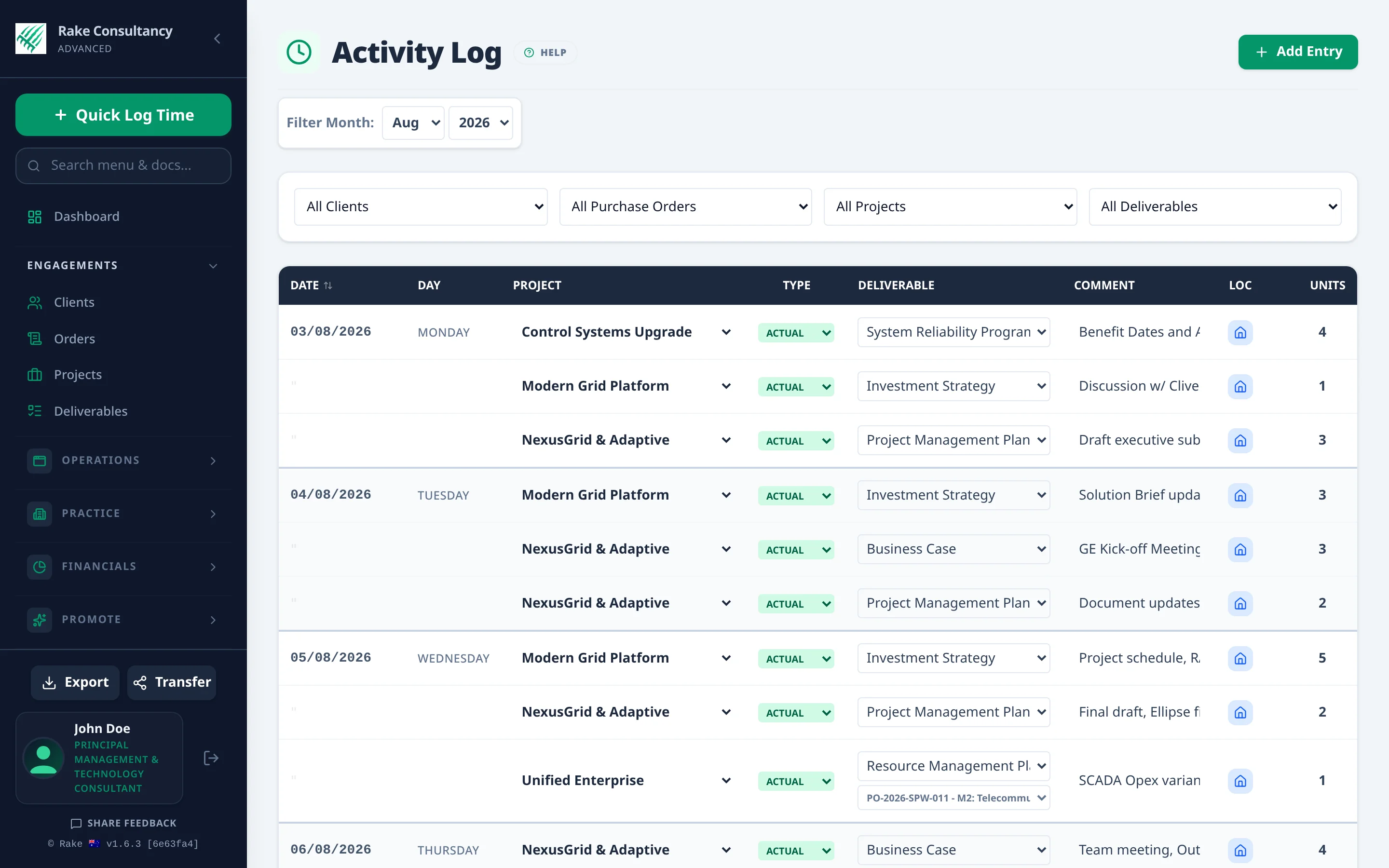
The Problem with Cloud SaaS for Independent Consultants
When you use traditional cloud accounting platforms, you operate under an asymmetric arrangement:
- Data Custodianship vs Data Ownership: If you stop paying your monthly subscription, your access to historical invoices, purchase orders, and tax calculations is locked behind a paywall.
- AI Scraping & Telemetry: Cloud vendors increasingly use aggregated user financials, billing trends, and contract values to train machine learning models and train market pricing algorithms.
- Unnecessary Attack Surface: Storing client Statements of Work and NDA-governed deliverables on remote third-party databases creates avoidable regulatory and privacy liabilities under the Australian Privacy Principles.
The Technical Solution: Local-First PWA Architecture
A true local-first application inverts the cloud paradigm. By combining modern Progressive Web App (PWA) standards with high-performance browser databases (IndexedDB / WebAssembly SQLite), the browser acts as a sovereign operating environment.
| Architectural Dimension | Traditional Cloud SaaS (Xero, FreshBooks) | Local-First Architecture (Rake) |
|---|---|---|
| Primary Data Store | Remote Multi-Tenant Cloud Database (AWS/GCP) | Local Client-Side Storage (IndexedDB via Dexie.js) |
| Offline Capabilities | None (Requires constant internet connection) | 100% Native Offline Functionality |
| Network Telemetry | Continuous tracking, analytics, and session logs | Zero Telemetry (Inspectable via Browser DevTools) |
| Data Portability | Restricted CSV/PDF exports | Instant JSON / SQLite database export and restore |
| Pricing Model | Compounding monthly SaaS subscriptions | Free Tier / Simple Pro Subscriptions or One-Off Lifetime License |
Architected for Australian Professional Practice Needs
Data privacy is only valuable if the system handles complex Australian tax and commercial workflows. Technical contractors require specialized mechanics integrated into their offline environment:
- Tripartite Agency Invoicing: Separate recruitment middlemen from actual end-client portfolios as outlined in our Tripartite Billing Guide.
- Real-Time ATO PSI Compliance: Self-assess Personal Services Income 80% rule thresholds offline with our PSI Tax Shield Analysis.
- Corporate Vault Retention: Compare Sole Trader vs Pty Ltd profit shielding as detailed in our $250k Financial Benchmark.
Frequently Asked Questions
What is local-first software architecture?
Local-first software stores and executes all data operations directly on the user's local device (using client-side databases like IndexedDB or WebAssembly SQLite). The application works entirely offline, eliminates third-party telemetry, and gives users direct ownership of their data files without cloud dependencies.
Why is cloud SaaS accounting a privacy risk for independent contractors?
Cloud accounting platforms store sensitive commercial data—including client identities, contractor hourly rates, project scopes, and revenue streams—on remote multi-tenant servers. This data is subject to corporate telemetry scraping, AI model training, data leaks, and persistent monthly subscription paywalls.
Can I back up or export my financial ledger from a local-first application?
Yes. Local-first architectures like Rake allow instant one-click exports of your complete database into JSON, SQLite, or Excel format. You can store your backups locally, on encrypted external drives, or in private zero-knowledge cloud storage.
Related Practice & Tax Guides
Stop Agency Ticket-Clipping: Tripartite Billing Guide
Learn how enterprise technical consultants manage tripartite billing relationships, recruitment agency margins, and purchase order burn rates.
Sole Trader vs Pty Ltd at $250k: Corporate Vault Savings
Compare Sole Trader vs Pty Ltd company structures on $250k contractor revenue and calculate how profit retention saves $21,744.
The $21,000 Pty Ltd Illusion: PSI Rules & Tax Shield
Understand how Personal Services Income (PSI) rules apply to Australian technical contractors operating Pty Ltd companies.